
During the 2014–15 school year, for instance, the deans and department chairs at the 10 University of California system schools were presented by administrators at faculty leader-training sessions with examples of microaggressions. The list of offensive statements included: “America is the land of opportunity” and “I believe the most qualified person should get the job.”Your lack of violent communism aggresses against my feels!
The Bill of Rights roasting on an open fire,
Jack Boots standing on your neck,
Welfare carols being sung by a black,
And cops dressed up like SS-kimoes.
Everybody knows a ticket from some angered po,
Flash Bangs make the season bright.
Tiny tots in the ICU from hard blows,
Will find it hard to sleep tonight.
They know the SWAT Team's on its way;
They've locked and loaded goodies with which to slay.
And every mother's child is going to cry,
To see if pigs really know how to fly.
And so I'm offering this simple phrase,
To kids from one to ninety-two,
Although its been said many times, many ways,
Stop Resisting... F**k you
As is often the case, reading an article online has provoked some long form thought from me today. This time, it's the continuing saga of GGC, which seems to be causing many to rethink the notion of what it means to expatriate.
The optimistic part of me wonders if people are starting to get that it's not the locale of tyranny that you need to escape - it's what the Freedom Feens call 'Horizontal Enforcement' - the tyranny of the mindset that needs to be escaped more than anything. Most importantly, it means more fully internalizing the libertarian philosophy that many folks understand and agree with on a logical level. Moving to a community of "like minded freedom lovers" sounds like asking for trouble if even one of them hasn't fully embraced the implications of liberty within a world of limited knowledge.
It should not be lost on the reader that the most successful "expatriation for liberty" project, despite it's flaws, still appears to be the Free State Project in New Hampshire, of all places. Why? Note the age of the movers and shakers there. This is part of what Ernest Hancock calls "Generation Next," the wave of people who were young enough when the love-o-lution came about to be able to actually throw off their indoctrination - the mental plasticity is just so much greater when young.
Now, sure, you may be saying, the real blame here lies with those who haven't internalized what it means to be a free, beautiful human being, as Ken Johnson has been accused of. Still, the tired truism that it "Takes Two to Tango" appears apt to me here, as unfortunately, years of indoctrination and propagandizing have left so many scars on even the most "hardcore" among libertarians. If this wasn't true, then how could insights from people like Doug Casey, Anthony Wile, Bill Bonner, etc. learned "the hard way," and repeated ad nauseum to their contemporaries still seem to bounce off the libertarian community in general? Oddly poetic that in a society supposedly plagued with narcissism, reflection is the hardest thing to do. One hopes Ovid is laughing in Elysium.
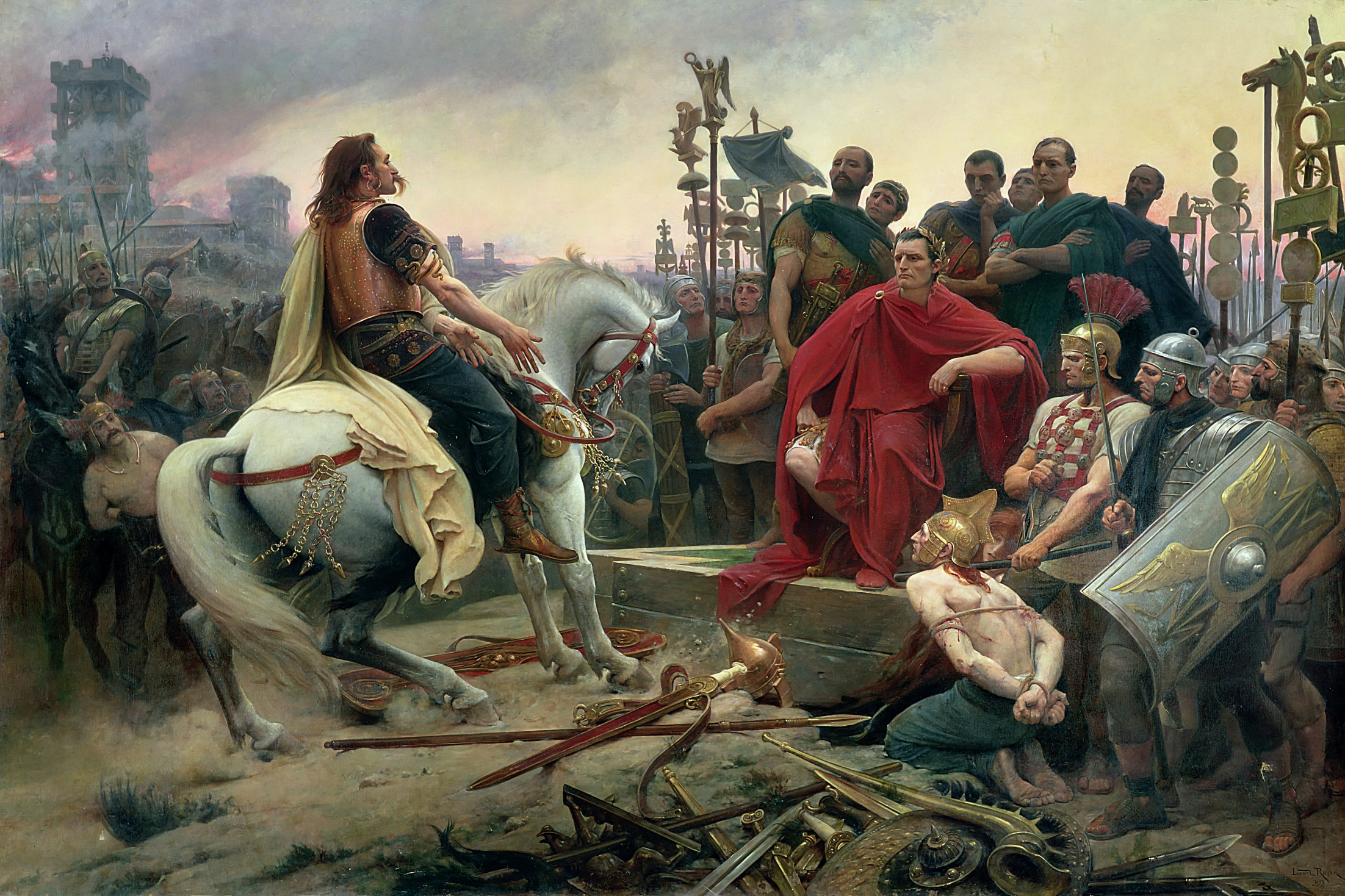 Recently I've had the opportunity to read through Caesar's war commentaries, which have undoubtably had quite the impression on many people throughout history. His writing style certainly helped this "Great Man" to become highly aggrandized both in his time and even now. This prospect was obviously not lost upon the man himself, as his writing is unashamedly good at advancing his own positions. As such, this stands out as probably one of the finest works of propaganda documented from the ancient world. Still, as with any good propaganda, there were many lessons and truths to be found there for one reading between the lines (or, of course, to ensare one with partial truths).
The largest thing that stood out to me was the laser like focus he had on attaining his ends and the clear thinking he had on using suitable means to obtain his ends. Though not stated in his book, if you do some searching, you can see that he was aspiring to be his generation's Alexander the Great. Supposedly his realization at the age when Alexander had the world prostrate before him filled him with a great sense of shame for not having achieved the same greatness yet (which pretty much guaranteed megalomania with that as your desired end). Despite what many would consider having a literally insane goal (as many elites thorought history do), he showed remarkable sanity in the pursuit of this goal, actually choosing things to do that would ensure he achieved this goal.
Immediately upon deciding his goal, he did as much as possible to win glory and fame among the people and politicians who wielded the most power. For him, this meant becoming a great general on the military side and a consul on the civilian end of the political spectrum. Both of these goals, like his primary goal, were pursued logically and effectivley. Two examples show this acumen quite clearly.
First, in combat he preferred using the size, ability and technology of the troops he had at his disposal hardly ever for purposes of more than skirmishing, unless conditions favored him winning a "pitched battle" involving the main body of both forces (due to favorable terrain, etc.). Instead, this force was used, much as the Security Services of the Modern State is used today, to induce surrender via hunger and/or terror in his foes before even striking the first blow (note here how I specifically talk here about the Security Services and not the modern conventional armies, which have comported themselves most incompetently for the greater part of the last century continuing to the present day). While there is nothing new here in the theory of warfighting (see Lao Tzu, etc.), it is still an instructive example of what to do in War (and what not to do in Pompey or the Gauls' case).
In regard to becoming a consul, though not touched on terribly much, he was certainly keen enough to ally with those who were from rival factions where their interests intersected, evidenced by the "First Trirumvirate" and mentions of his former bond of marriage to Pompey's relative. This of course, was supplemented by the usual politician stuff, such as liberally spreading favors about to ensure loyalty to him. Later, after crossing the Rubicon, his positioning and constant delagations of peace towards Pompey's faction, though really a cynical ploy preying upon Pompey's hubris, did much to make him look like the "good guy" among both people already inclined towards him and those loyal to Pompey (once they had Caesar's army breathing down their necks). All these things cast the die in favor of him.
Basically the man really knew how power "worked" in society and acted accordingly, to spectacular results. The only hole in his whole plan was inherent to the goal itself, as the only means suitable to achieve his ends were guaranteed to make him powerful enemies and generate blowback for him once his goal was achieved. Indeed, once he achieved his goal (a topic he couldn't write about thanks to Marcus Brutus), he really didn't seem to be able to do anything constructive with it (just like pretty much everyone else whose goal is simply to gain the power, not to use power as a means to some other end).
It should go without saying that the above insights go well with some of the meditations Marcus Aurelius had upon power, as he was in a similar position but had the benefit of time and age to be able to reflect on what brought him success and failure once in a position of power.
Other than the above, there were a few other things of note here, specifically more on how the practices of the time for gaining and maintaining power really haven't changed materially from then to now. The US Empire still demands hostages to blackmail conquered nations into doing our bidding, though it is now done via the security services and the financial sector. If you want to see this in action, then consider the ongoing NSA and CIA spying, coup generation, etc. from basically the foundation of those groups. Also note that pretty much every subservient nation to the US has to keep their gold on deposit with the New York Federal Reserve, which promptly re-hypothecates the gold into Corzine Vapor.
Similarly, his impressions of the Gauls and the nature of man stand out quite clearly, as the Gaulish thirst for freedom was not criticized by Caesar, but instead taken as a given, as men would naturally prefer living according to their own conscience as opposed to Roman slavery (which was frequently the rallying call of the Gauls). At least then the elites were quite open about their aims to enslave the populaces they were invading, which today has to be grotesquely evaded with neologisms like "Humanitarian Intervention" since we now pretend not to be a racist and sexist society of primitive tribalists (except on game day).

I had a feeling the "Deep State" essay of the other day was a bit of a limited hangout. Thankfully, Peter Dale Scott comes out with the antidote:
...the current threat to constitutional rights does not derive from the deep state alone. As I have written elsewhere, the problem is a global dominance mindset that prevails not only inside the Washington Beltway but also in the mainstream media and even in the universities, one which has come to accept recent inroads on constitutional liberties, and stigmatizes, or at least responds with silence to, those who are alarmed by them. Just as acceptance of bureaucratic groupthink is a necessary condition for advancement within the state, so acceptance of this mindset’s notions of decorum has increasingly become a condition for participation in mainstream public life.
As I have known for some time, it's not a conspiracy that sharks swim towards blood. The only way to get away with this sort of evil is to make the system evil so that the removal of any member (shark's teeth) does not harm its operation.
Ironically, you can't centrally plan an empire; it has to come about because a de-centralized network of criminal organizations (like political parties) all see it as the best way to aggrandize themselves. As such, the only true solution is to abolish the government, or at least the Standing army, police and security apparatuses. If you don't go all the way, they'll just come back though.
Perhaps the most important takeaway is that the vast blackmail apparatus that is a part of the deep state is largely unneeded to control the elected organs of the state. A system that can produce such a thing is already so evil that anyone who could win office would prefer participation to resisting evil.
 A book review of Tradgedy and Hope by Carroll Quigley.
This was a profound book to read, but one of the most difficult I have ever read. I've been working on getting this 1300+ page monstrosity under my belt since March of this year. This is not due to the difficulty of the subject material covered or being a weak reader. Heck, I was able to blaze through and grok Human Action within a two day read when I first picked it up. My inability to read this book quickly is due to the Tragedy playing out within Quigley's mindset. This man is a perfect example of what Mises correctly recognized as what went wrong with Western civilization as a whole - the irony of which cannot be lost on a reader enlightened by Misesian insights. It was difficult to bring myself to continue to reading when the fundamental flaws in Quigley's worldview became evident at certain points in the book.

This is not to say that Quigley is just another unintelligent propagandist for the regime, though I suspect in many ways this will be his unintended legacy. This is a passionate, reasoned piece of "revisionist" history written by an obvious scholar. Where Quigley, as most modern day "liberals" go wrong is with a misunderstanding of Economics, specifically the suitibility of the means selected to achieve societal ends. What makes it tragic is that Quigley obviously was smart enough to have grasped this insight fully himself, if only he could see it. Indeed, his evaluation of the provocations of the Round Table types that led to the Boer War is that, even though he saw their ends as agreeable ultimately, their means (violent agression that would rightly be called terrorism today) prevented them from ever achieving anything other than alienating both the native population and the nearby Dutch colony. As usual, the "Do-Gooders" made the mistake that most make, namely that forcing the issue (whatever it may be) will somehow produce something other than animosity and privation for all concerned.

Otherwise, this book is valuable if only for some of the inside dope on the "Anglo American Establishment" (a topic Quigley seemed infatuated with - I suspect it was his stumbling block to gaining real awareness). Moreso for the exposition of how the elite of today view the world. This history definitely sounds like just the pretext our more sociopathic elites would need to justify their own actions. This also would work for some of the lower level or non-crazed commisars, as it provides a compelling arguement for those not used to questioning the axioms they base their reasoning on. They really just need to stop drinking their own Kool-Ade.
See here and here for backstory/inspiration for writing this.

Though I was still in diapers around the time the author for the second article got his C64, my interest in computers came in a similar fashion. I saw how powerful Linux and BSDs could be over Windows 98 (even though much effort was required to accomplish a good setup at the time). There are many SysAdmins and Programmers I've met from my age group, and they usually have similar stories. I'm still amazed every year at how much of the indoctrination I'm shedding, while simultaneously realizing what a con job got done on me during my incarceration within the public schools.

I suppose I have my parents to thank for being able to get this far. By the time I entered kindergarten, I had already been allowed and encouraged to learn how to read and understand english phonetically. I had played enough card games to understand basic arithmetic. It was too late for the State to turn me into a completely dependent, drooling serf. Still, "Life in the School Zone" leaves nobody untouched. The latest steps in my journey come from an unexpected bout of unemployment for my Birthday present earlier this summer.

One of the purposes of teodesian.net is as a sandbox for myself and Doge to experiment with web technologies, which have fascinated us for years. Over time, we've rolled our own system of microblogging, blogging and file sharing that has features I really like (and that I haven't found in other blog/CMS systems out there). I took this time to roll up/refactor and package this system in a way I can distribute this to the public (GPL'd of course) partly as a 'feather in the cap' to show off, partly in case somebody thinks similarly to us and wants to use our system. I should be done putting the finishing touches on that by the end of the week and will post an announcement at such time. Doing this has not only improved my ability (which I intend to continue to do), but has begun to unearth some of the creativity I had buried along with my feelings around the turn of the millennium (and for reasons I won't to go into). More than that, I'm beginning to dream frequently again. I thought for years that I was just simply not remembering having my dreams, but now that I'm having them so frequently and remembering that I had them when I wake up, I'm beginning to wonder if a simple failure to remember them earlier was true.

If I keep heading in this direction, then I suspect I may just wind up having the most fearsome, exhilarating time in my life before I'm done. Not a bad way to start this website's "Third Act", I suppose.

Postscript: Between me and Doge, there's still about 10 or so outlined, unfinished blog posts we have had festering in our conciousness (and our hard drives!) that need finishing. I may just have found the motivation to finish them.
It's kind of odd, looking back at almost two years of what has more or less been the current iteration of teodesian.net. In many ways it is hard to believe that what started on 6/27/2011 went from being (to me) a novel way to keep up with what interested me and replace Google Reader's sharing functionality, then to an almost consuming habit. Still, something has obviously happened recently, signified mostly by our lack of postings, both on the newsfeed and on the blog. This has already been acknowledged to a degree earlier when we had a 'Hiatus'.
Recently, the "magic" seems mostly gone from the process for me. This is not to say that it is a waste of time or that I still don't have a lot to learn from observing current events. A large part of it is genuinely related to us being too busy working at IRL goals to dedicate as much effort to this, but it doesn't strike the root of what's been bothering me for a while.
I think the "Tyranny Today" has actually started to get to me. After learning so much over the last few years, my worldview has gotten pretty much figured out by this point. Now seeing the kind of depravity that oozes from the pores of the state's apparatchi is no longer a source of fascination, but one of aversion. Especially when I see examples effecting me in real life, my desire to see more of this quickly becomes less than reading through a gore thread -- slowly.
So, what, then, must I do? For now, I'm going to read a few more books. Focus more on self improvement and enjoyment. Heck, maybe think up some decent code changes to this thing.
I don't intend to stop posting here. Far from it. I just think I'll ultimately find more of value in the positive side of liberty. I guess it shows that I've been listening to the Freedom Feens at lot more at this point. I'll still post some of the more puzzling or analytical pieces regarding political machinations, but for the most part I'd like to post cool stuff and blogs more.

Societies burdened with governments require pressure valves. Whether it is the tax shelter or porn, from EverQuest to Facebook. Humanity constructs another ideal shibboleth to lose themselves inside almost daily. Those who do not understand the individual idiom that each insider to these systems "groks" will likely react predictably upon seeing it, without even acknowledging how alien their paradigm is to those outside his lawn. Even now, I suspect I've "lost" some of you reading who do not share in my set of life experiences, consisting of indoctrination, pop culture and anarcho-capitalism. Well, that and the cliched teaser image and title that are trying too hard to be painfully hipster (as usual).
If, however, I haven't alienated you yet, then there's a good point to be made here. Due to all value being subjective, even "reality" doesn't have a monopoly on where we choose to "live" mentally. Indeed, even the science done on this seems to concur. As such, whichever "reality" we choose to live in will likely be the one with the best percieved return for the least required effort. Let me put it another way, through the paradigm of video games. Would you rather play "Wait in line at the DMV" or "BonerQuest"? Life under the state seems a lot more like Takeshi no Chosenjo than anything you'd actually want to play.
It should come as no surprise that more money went towards buying video games in 2010 (US Only) than was sent to the DNC for the purpose of getting the Magic Negro reelected in 2012 - a difference of over 10 Billion Dollars. I suspect there were more gamers than voters this year too, but to my knowledge, that appears to be an unconfirmed suspicion without any good statistical evidence gathered at this point. Certainly if you just switch over to internet or TV users as your pool, you beat it easily. It is common knowledge by this point that Internet and TV fulfill much the same purpose as video games to the average user anyways, so this certainly isn't just comparing apples to oranges.
Society is necessarily going to be a mirror of the people, so next time you get the urge to castigate some youngun' for playing video games, listening to devil music or snorting krokodil off the ass of a tranny hooker, think about the society that you helped to create before sitting back down to watch Fox News.

|
This article is paid for by taxpayers like you
Thank You, America. |
 This is going to be a quick take, but it's a bit long for a nuze posting. Anyways, it looks like out of the 221.5 million eligible voters (229.95 Million of age to vote less ~ 7-8 million convicts - I'll go with 8 to be conservative), around 120 million found it to be worth their time to vote*. That means 54% of people decided it was not even worth their time to vote. This is great news, as it means that nobody legitimately won the election if you counted the votes sanely (haha!).
Ultimately, this is great news, as it means the majority have likely withdrawn their consent, even if just due to apathy. Still, there is also another side of the coin here, as it also means that the government (as usual), could care less about what the people want and will go ahead being the pillaging minority that the state always tries to be until they go full retard and embrace communism.
UPDATE: I guess I should just throw this all out and say all the real votes were either stolen or fence posts. What a joke.
*Note that around 1.5 million were confirmed for Libertarian. No telling how man little 'l' libertarians there were, because those aren't counted in the court statistics (as they'll never vote).
" No, that's your mistake! You are the one who doesn't understand...Like your father, you are the one who lives in an idealistic world. That world does not exist, Sibel. Governments, be it Turkey, Germany, Egypt or the United States are all the same. They want one thing: power to rule. They cannot tolerate truth or dissent. "
Sibel Edmond's Mother, Classified Woman pp. 155-156
I recently have read several books that really brought home to me the true depth of depravity in our government (and to varying extents all governments). I used to be fairly jaded and able to talk about these extremely tyrannical things going on while remaining pretty calm, but I can do so no longer. As such, I didn't quite think that I "Hated the state", like Murray Rothbard said was a big part of being a real fighter for liberty. Though I had the moral passion for Justice, I did not fully internalize how what we have today is not only far from, but the complete opposite of justice. It was when I realized that the message we send by not resisting these criminals, and "running silent and deep" only encouraged them that my strong dislike and aversion turned into a steely determination to resist these criminals in every way possible.
Now when folks like Alex Jones (the interviewer in the video above) talks about being fired up, I really understand on an emotional level what he's talking about. It really is hard not to believe that this is an insane death cult, considering it's the only way to be logically consistent with the actions. The temptation to run as fast as I can from the USA has become nearly irresistible -- we're way past the point that 1776 could solve these problems.
But, time brings calm, and I think I've discovered a couple of rather mundane threads that run through all of these things; an explanation which might be of remarkable rhetorical utility which I intend to make a forthcoming series of essays on. Anyways, I'd like to share my thoughts about one of the few books that will chill almost anyone to the bone.
To begin with, I feel pretty good about excerpting the book above, considering the ridiculous and hysterical claims of state secrecy the FBI and DOJ have levied against the mere publishing of this book. Such bemusement was the general feel I had starting to read the book; this is despite regularly reading Sibel's Boiling Frogs Post, and having heard of some of the explosive allegations surrounding the cover-ups she exposed. Even these things did not prepare me for how brazenly corrupt and evil the reprobates in all branches of government and the media were when it came to Sibel's case.
When I saw that the "State Secrets" privilege (literally a relic from the old star courts) was being invoked not just to classify ridiculous numbers of documents daily, but to prevent discovery, legal defense and practically every other element of due process that I realized that the precedent had been set. The government will never again be limited in any way by anyone for any reason until the whole damn system collapses. It's "If Sulla could, why can't I?" all the way down. They will just wave their magic wand of state secrets, ruin the lives of citizens who resist, and intimidate all politicians and media personalities with their police state blackmail apparatus until it grinds down to full collapse.
It was truly shocking to find out that not just some, but all embarrassing incidents in the FBI and other alphabet agencies are covered up, and that this was common knowledge in said organizations. This is doubly shocking when you find that the government basically concedes all Sibel's points, but refuses to hold anybody whatsoever accountable. Talk about moral hazard -- no wonder these clowns are soiling themselves over terrorism; they know that the way they've set up these agencies is such that they can't even catch a cold!
Having been in organizations where a culture of "face saving" and other such tribal "we look out for our own above all else" behavior has literally wrecked productivity, I know how this ends. It is all the more dangerous and destructive considering that these guys are in the business of violence; If anybody can make people disappear to cover for incompetence, things get real scary quick. I can't honestly say beyond a shadow of a doubt that such is not already going on; in fact there is strong evidence in many cases that the FBI, F-Troop, the CIA and DEA have and are making people disappear.
Needless to say, this is a book which should be read by all Americans. If this story of all the branches of government covering up for foriegn infiltration involved in nuclear arms smuggling and 9/11 can't break people out of their trance, I don't know what will. Considering that half the voting population (Demoncrats) are now lauding the doubling-down on these policies which were so evil under Bush, and that the clownish Rethuglicans are basically groveling and worshiping Obama's use of these powers because of this, I'm not holding my breath. It seems the general public has been so inculcated to authority via public schools that there's no limit to what they'll put up with.
 There are some days where I really shouldn't bother reading my emails. Though I list Naked Capitalism as one of my sources in the Links page, there are some pages I skip over rather routinely. This one, unfortunately, got emailed to me as well, so I decided to see what must be so neat about this article. Alas, I could not resist ragin' hard enough to write a rather lengthy reply over this one. Below is the reply, with a link added for context.
This time, Phillip Pilkington continues with his usual strawmanning and misunderstanding of Austrian Economics. I'll admit, he would be correct to bash the 'right wing' and the CATO crowd for acting illogically/nostalgically. Ultimately, however, he's not even striking in their direction, except tangentially. Judging by Phillip's references and earlier hit pieces on Austrianism, this appears to just be another polemic against Austrian economics (due to an MMT based Inflation Infatuation).
In any case, the Austrian Economist does not advocate either inflation or deflation, as the 'correct' money supply is necessarily unknowable to the Austrian due to the implications of the action axiom. If asked for a policy prescription, any 'target' amount of money given by an Austrian economist would always be incorrect even by their own admission, unless due to accident/luck (as it is not calculable via economic analysis, due to omniscience not being a means available to man).
Mises recommendation would not be to abolish the fed or abolish the government, instead merely observing that central planning of 'x' is necessarily going to be an insufficient means of obtaining whatever 'y' is and must thus necessarily end either by voluntary abandonment of these "Means unsuited to the attainment of certain Ends" or by the failure of that collective venture due to the compound effect of persisting in employing means unsuited for obtaining whatever the desired end is.
Even more essential to the debate is the very structure of production and 'Cantillon effects', which all but the most delusional MMT bozos can grasp (Ed Harrison gets this). MMT has a similar, but much more limited notion of banks not being 'reserve constrained' but rather 'capital constrained'. In the same way, regardless of the supply of money, the real capital pool of an economy is not determined by the supply of money, but by incentives existent to employ capital (which the money supply does influence, but is not the only factor). One can contrast the 'miraculous' gold glut period Pilkington refers to with the 'disastrous' gold glut that accompanied the fall of the Spanish Empire. Why did these periods have similar monetary growth profiles but different outcomes (ENDS)?
If you've been paying attention, you'll see it is the means employed by the actors in the market to obtain the gold. The private gold miners of the 1800s largely were providing a demanded product at a price freely negotiated between them and the buyers, where the Spanish empire had no such concern. Thus the Empire made errors in calculation due to having no frame of reference to judge the profitability/viability of their decisions as it relates to funding the continued operation of the Hapsburg Empire. This caused more errors later when the empire frivolously wasted all their gold on that century's version of 'No Bid Contracts'.
Once you start walking down those roads, whether it starts with paper money and ends with authoritarianism or starts with authoritarianism and ends with paper money is irrelevant, as doubling down on any coercive end to obtain anything other than privation will necessitate ever more intervention until whatever comprises the collective achieves a perfect state of privation and savagery. The Spanish monarchs eventually figured this out and voluntarily abandoned most of their schemes when their cousins got hanged and guillotined or otherwise fell from grace.
In the end, Pilkington makes the Austrian case himself and doesn't realize it by using 'the great liberalism due to gold glut' theory he espouses, as no central bank was required to accomplish this miracle of inflation without the 'stag'. He then goes on to note that the deflation afterward was marked by massive cronyism and police stating (mostly born from the 'Reconstruction' of the south into the north's plantation). This massive increase in slavery resulted in a deflation the Aztecs got to experience earlier as all their gold got 'liberated' from them by the Spanish empire. The north, of course, was busy spending all the spoils from the enslaved south to pacify the southern slave states at the time, so the economy predictably suffered due to the misdirection of scarce resources.
Philip doesn't get that the reason the Libertarian Austrians decry paper money/centrally planned inflation is because it is not caused by an actual increase in scarce resources and thus breaks the price mechanism in ways both unforeseeable and catastrophic. Since MMT guys are stuck in Book Value world, I suppose it is unsurprising that he does not grasp this.


